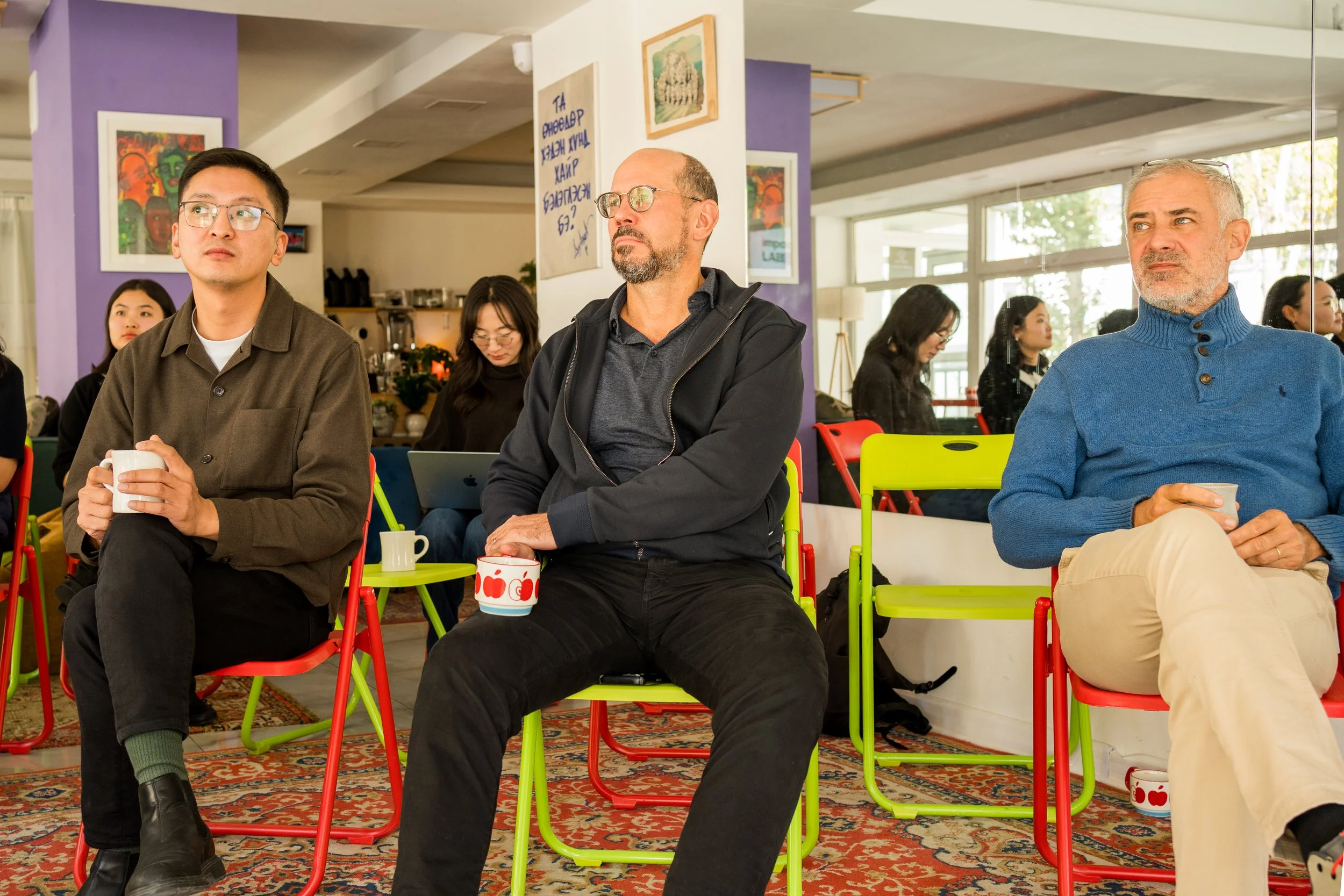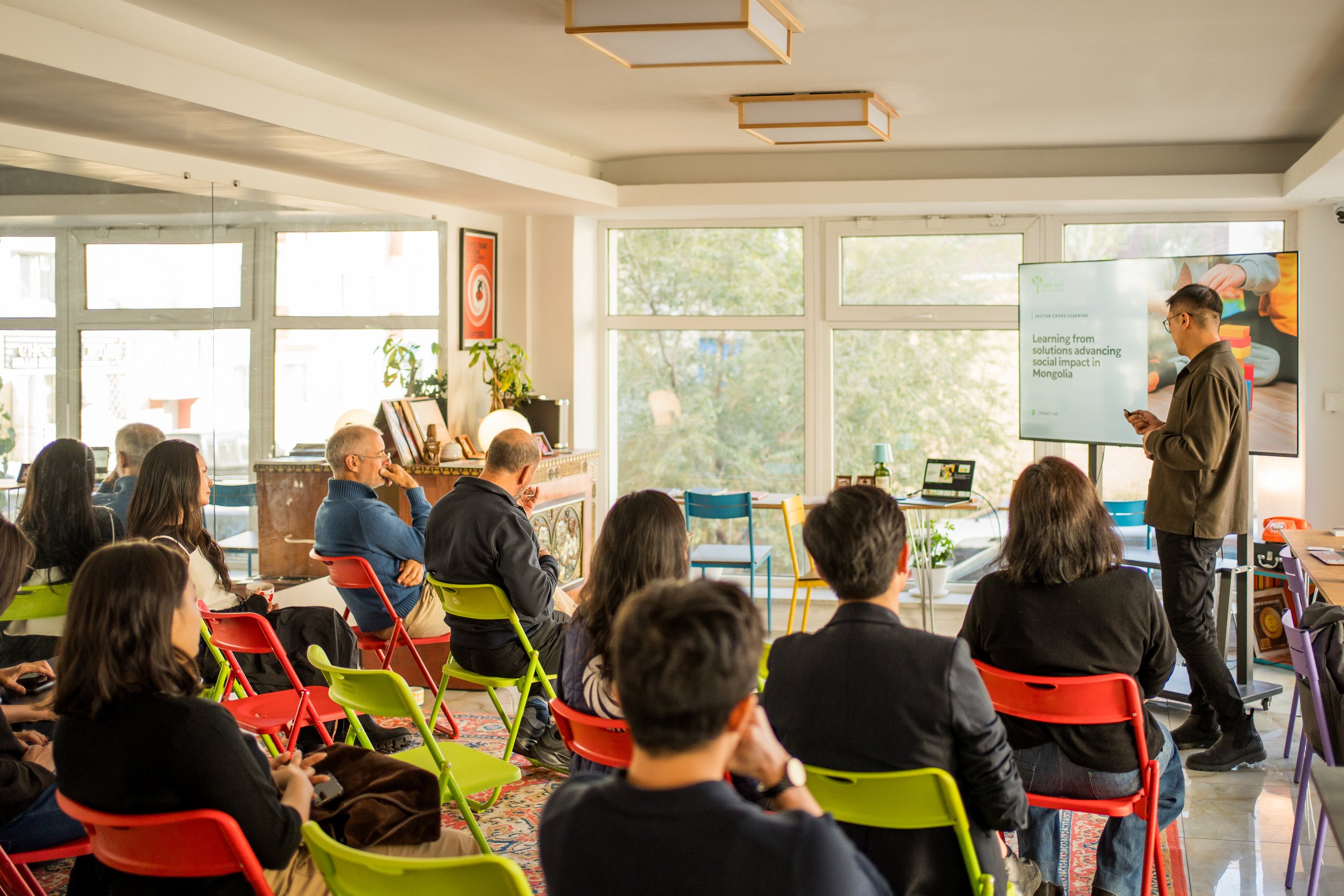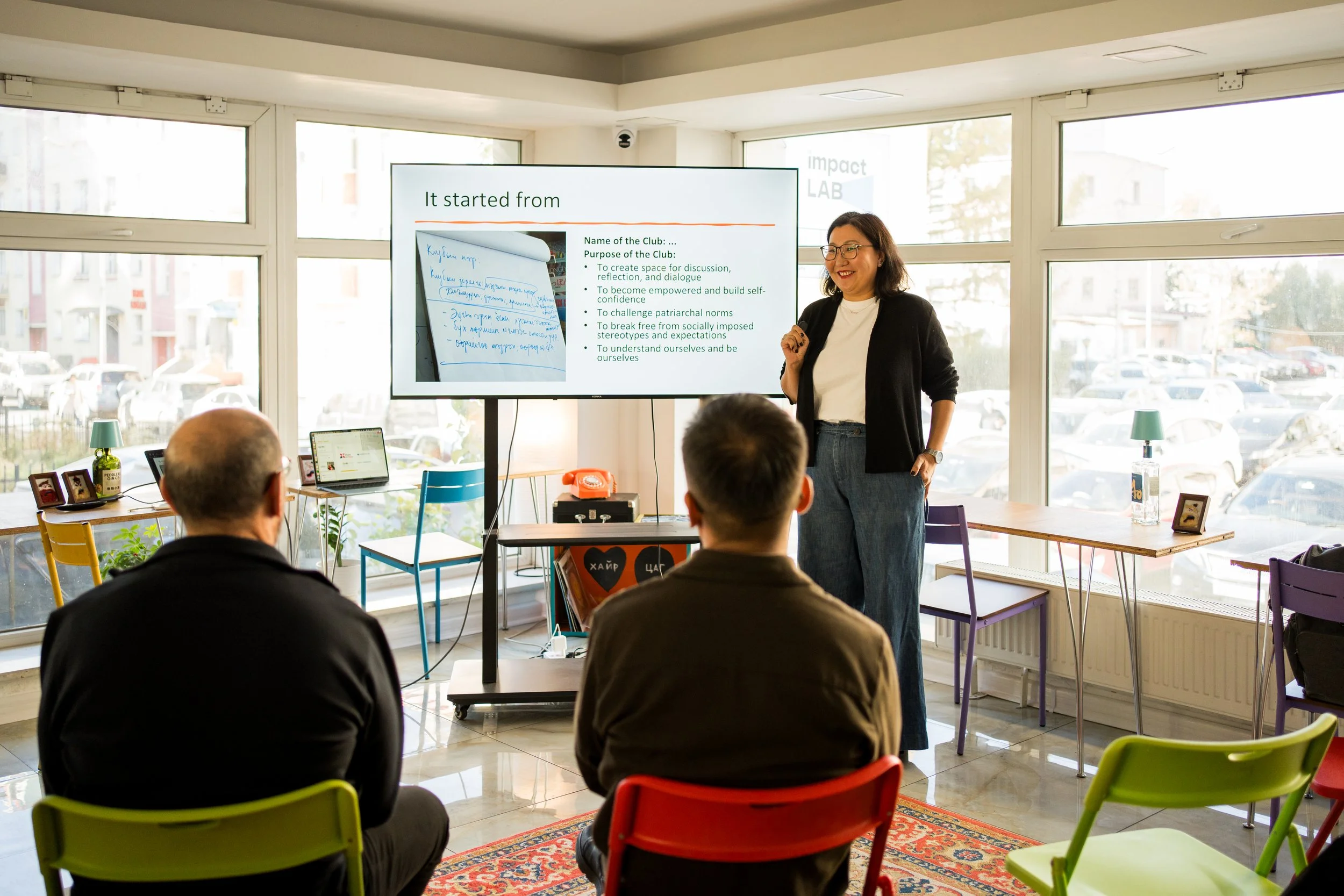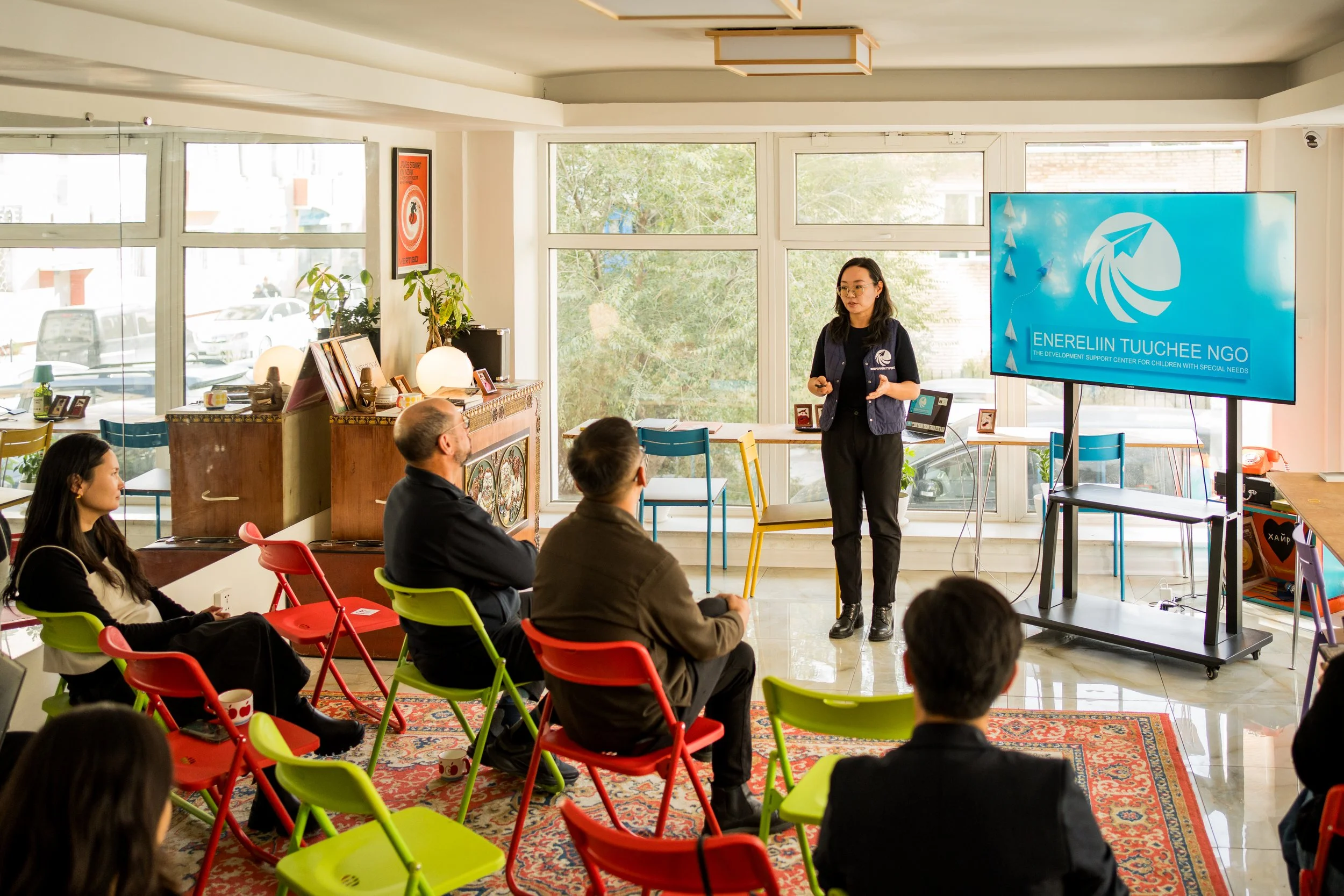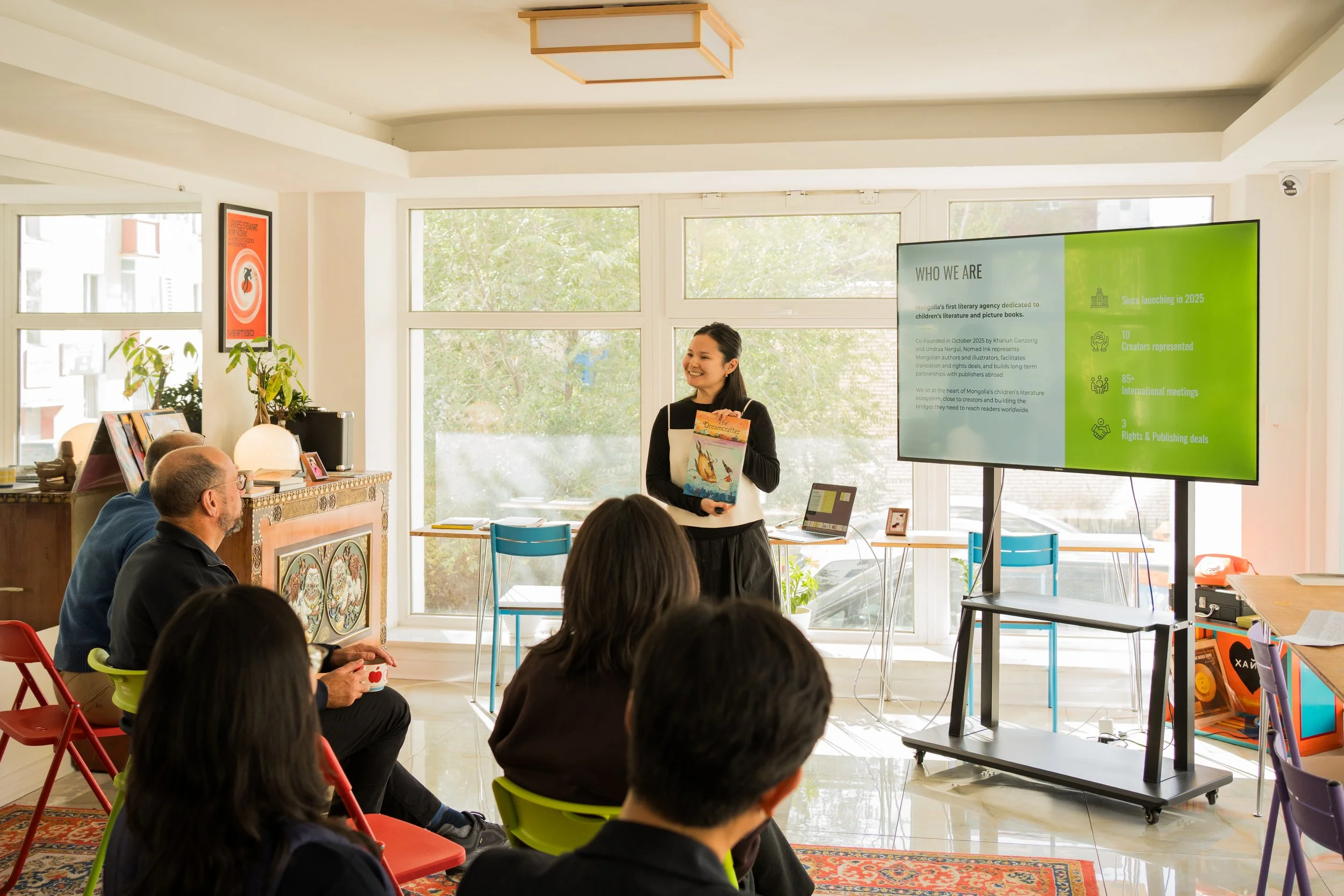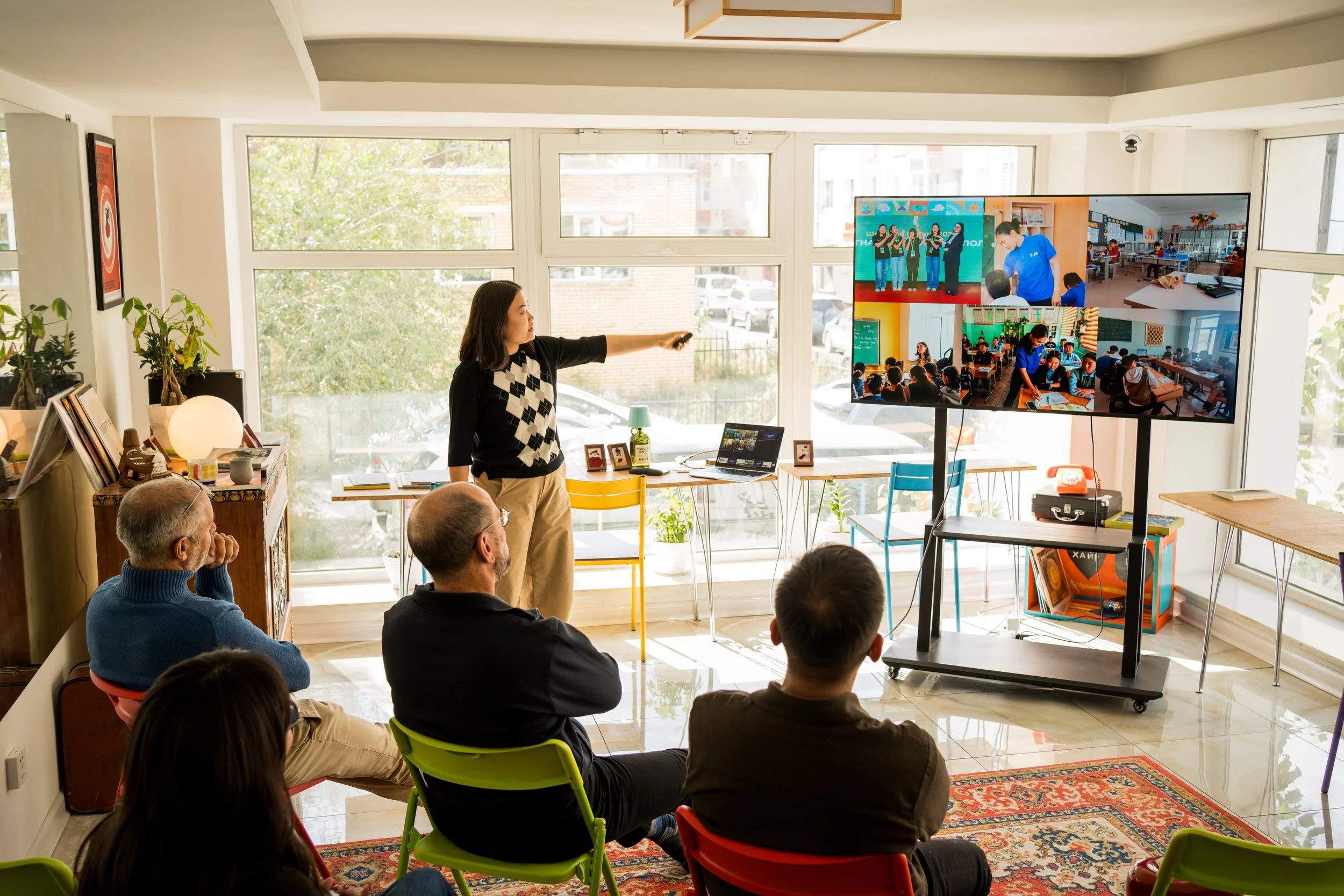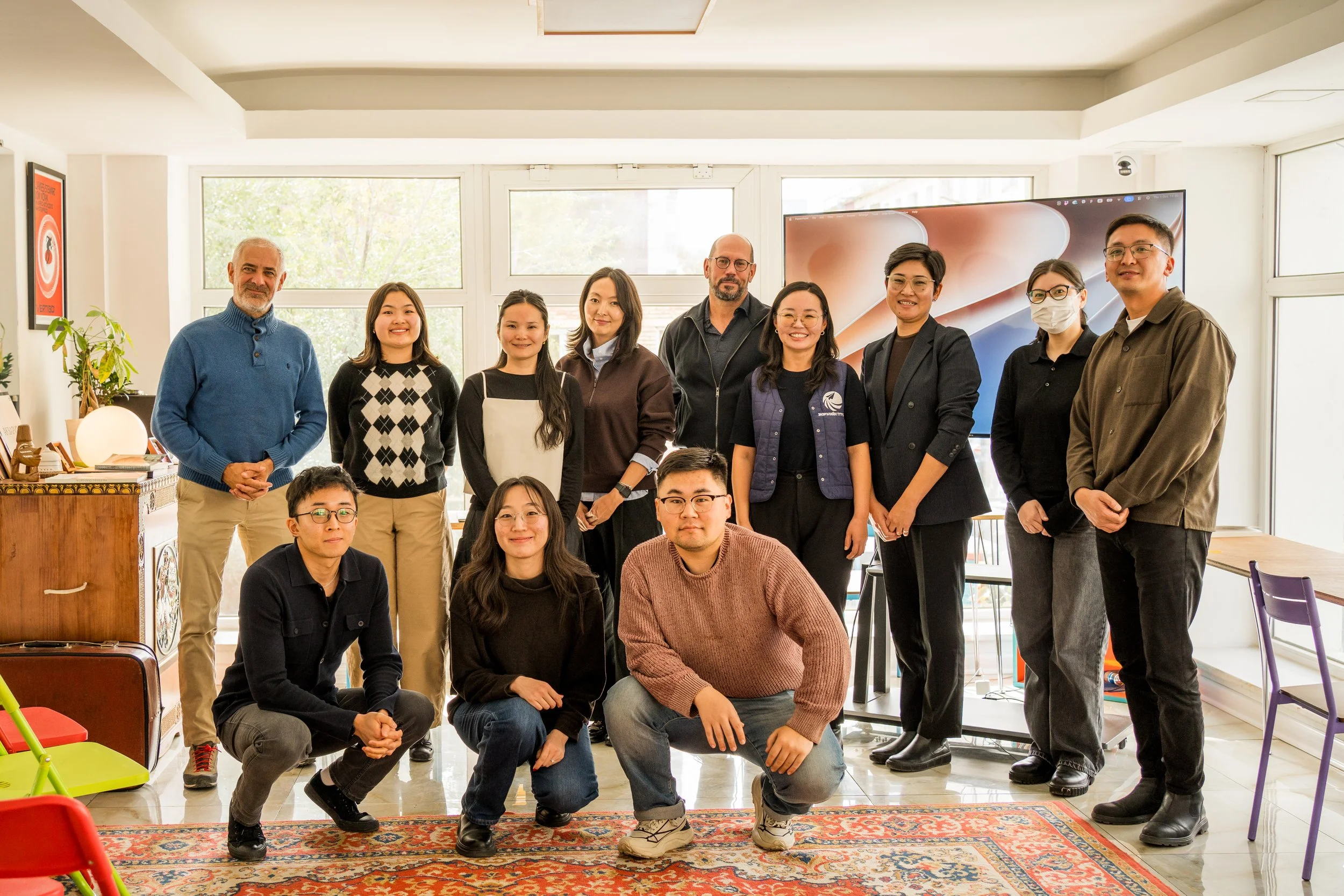
At the cross-sector learning session: with representatives from Women for Change NGO, Enerliin Tuuchee NGO, Teach for Mongolia NGO, Nomad Ink Agency and Lorinet Foundation team.
“After our trip across Mongolia in late summer 2025, I had promised my fellow board member Thierry de Panafieu that I would show him Ulaanbaatar when it was a bit colder. Thirteen months later, here we were. It wasn’t quite midwinter, when temperatures regularly drop to -20°C or -30°C. Still, when we landed from Hong Kong one evening in late September it was close to -5°C. That was quite a shock after the balmy 30–32°C of Hong Kong and Singapore.
We had two packed days ahead of us: time with our team, and meetings with existing and potential partners. We also made a point of meeting organisations working outside our core focus. We wanted to broaden our horizons and get a sense of how dynamic civil society in Ulaanbaatar is becoming.
I have often said how much talent I see in Mongolia. This visit made that impression stronger than ever. At Impact Lab, Oi Heritage, GerHub and every other organisation we met, the first thing that struck us was dedication. Many of these people depend on other work for their livelihood and juggle several careers to make ends meet. Yet they give a remarkable share of their time to causes they believe in, from building a network of social enterprises to reconnecting young Mongolians with their heritage through the practitioners and guardians of those traditions.
More striking still was the calibre of their thinking. Agnuush, co-founder of Impact Lab, came to our meeting with a prepared document. It set out the organisation’s initial objectives, its progress against each of them, the lessons learned so far, and the next steps for improvement. She then walked us through a diagram mapping the thinking behind their social enterprise assessment framework, and it was remarkably complete. Thierry and I have both sat through presentations from top consulting firms that were less rigorous and less compelling. In a country where close to 30% of the population still lives below the poverty line, that is remarkable. It is also different from what we have experienced in comparable settings elsewhere. There may be some selection bias. But it is hard not to feel there is something special about Mongolia and its people. Perhaps it is no accident that a nation of so few people once built the largest contiguous land empire in history, through grit, ingenuity, and a readiness to adopt the best tools and knowledge of those it encountered.
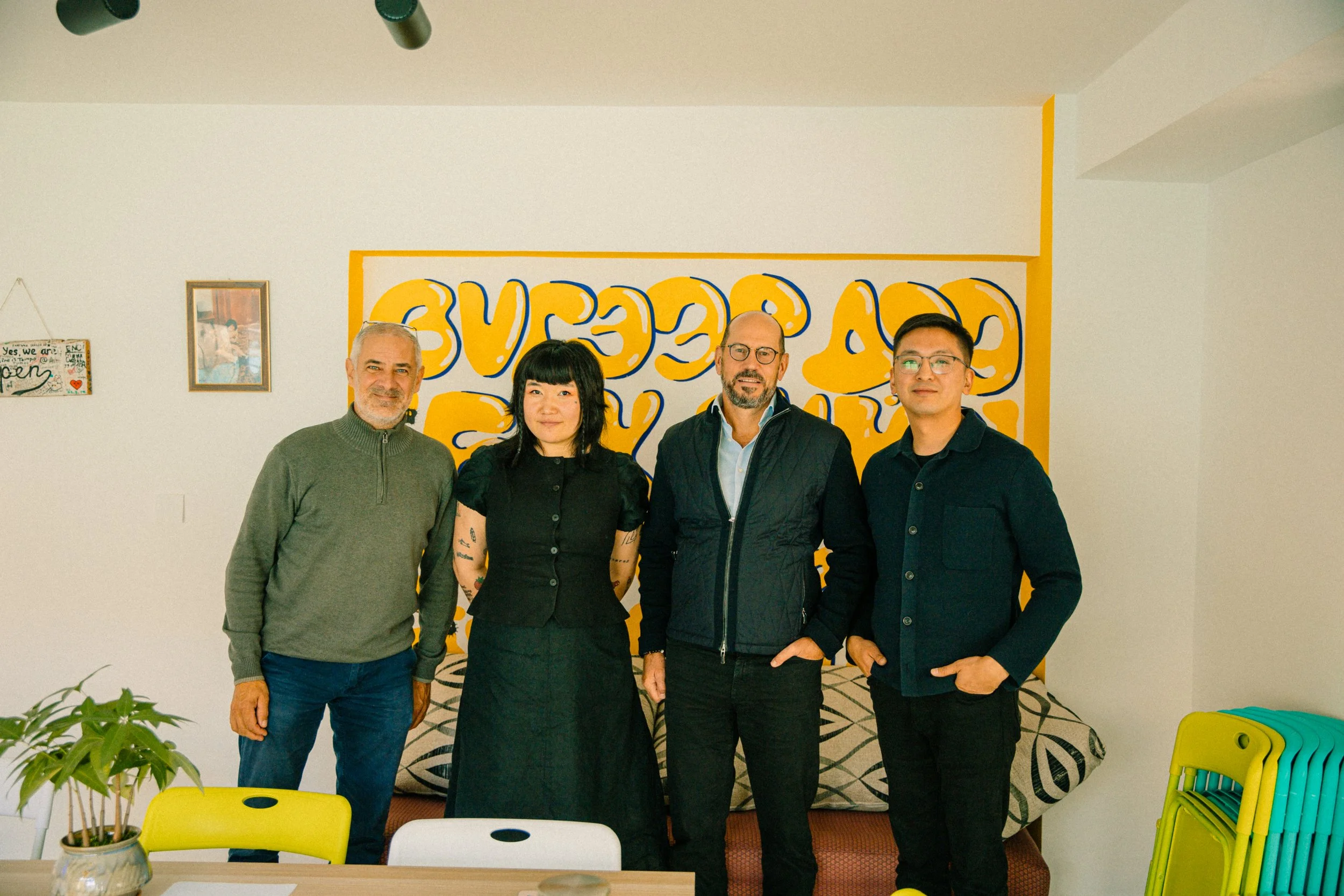
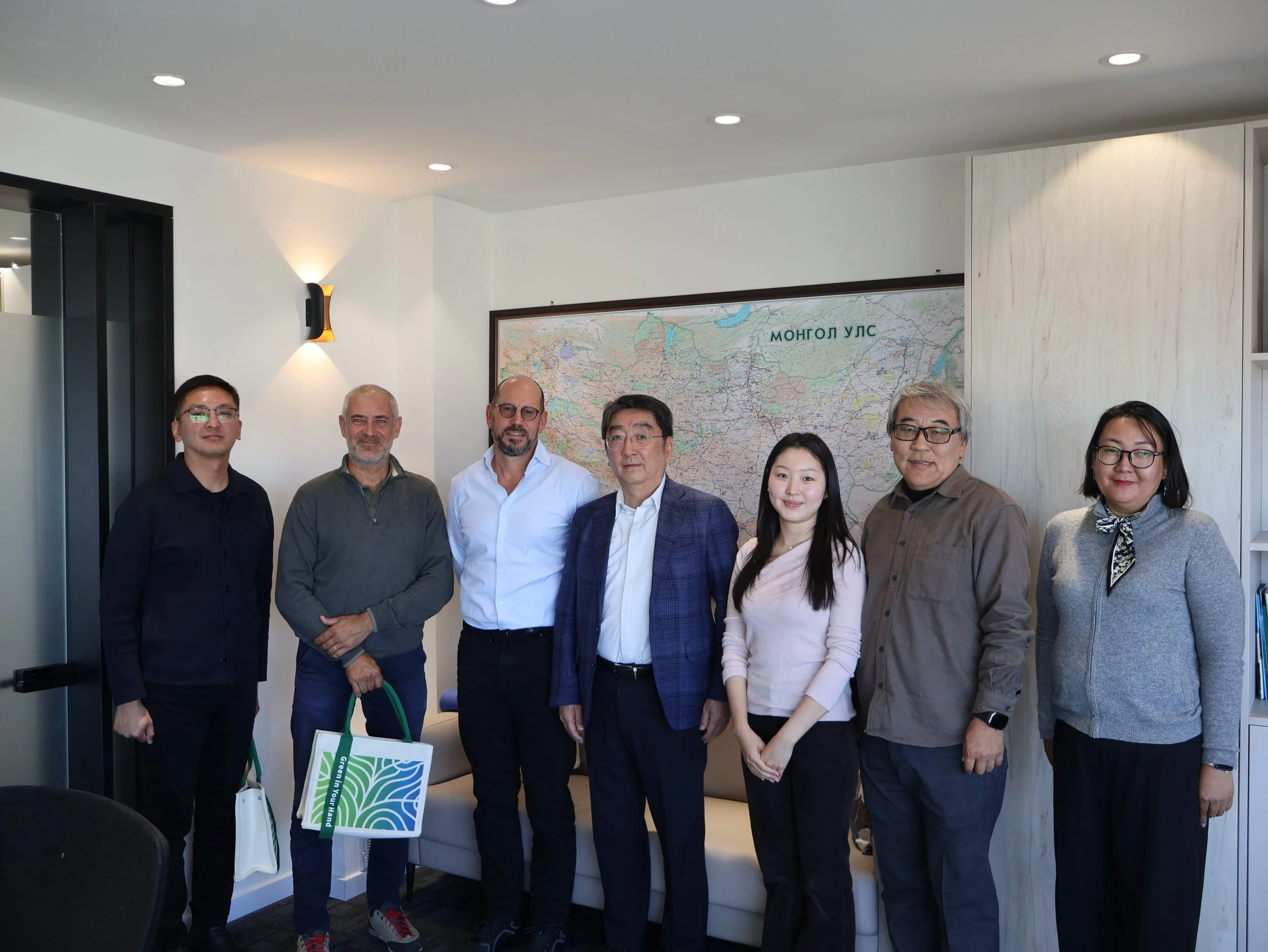
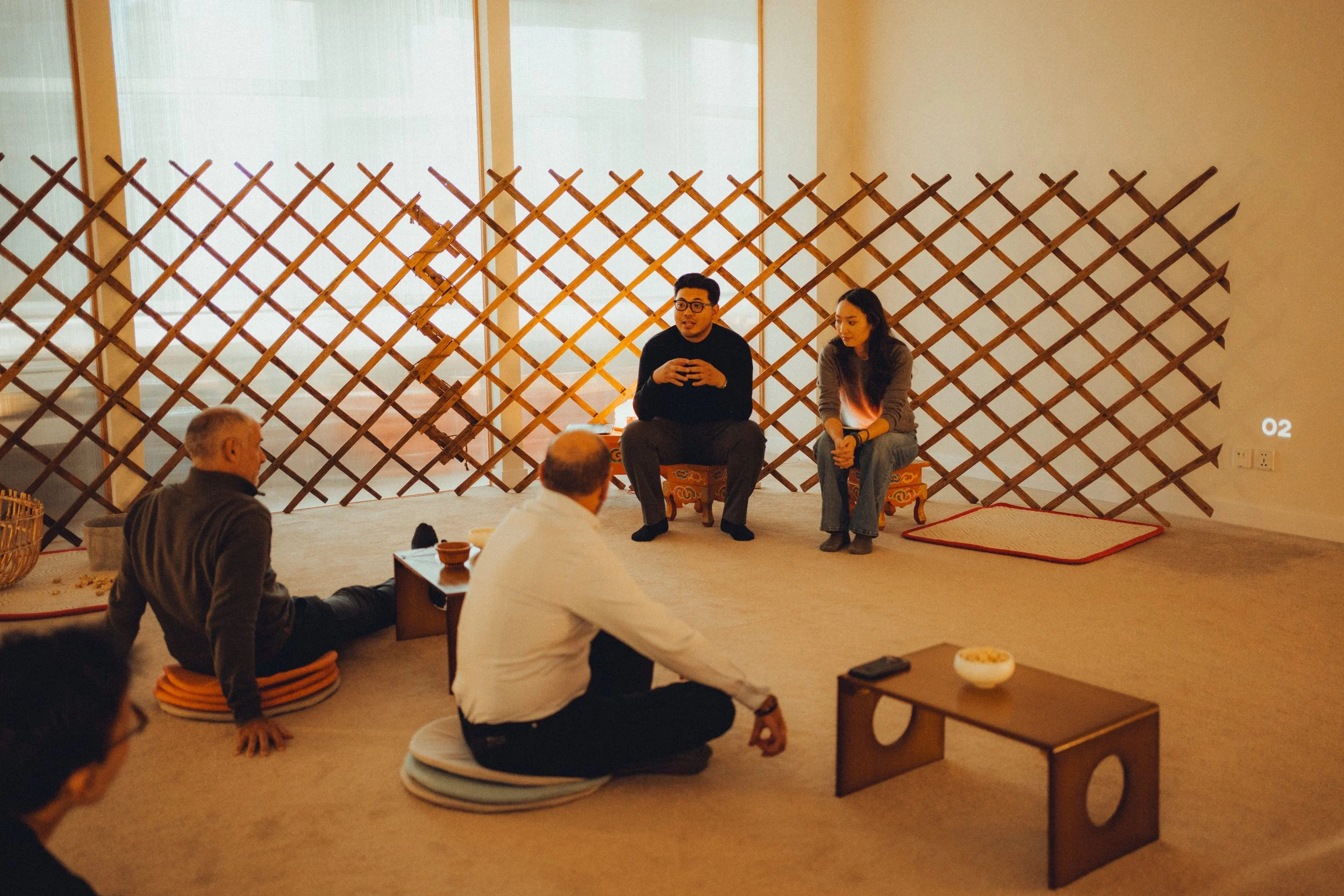
On the second day we joined a round table with Women for Change, Enereliin Tuuchee, Teach for Mongolia and Nomad Ink, none of whom we currently work with. Everything above applied to them too. But something else became clear, and it held for every team we met that week. The great majority of founders, leaders and managers were women. Roughly nine in ten of the people we met were women. Young men were conspicuously absent.
That absence has stayed with me. Our team reminded us of something they learned through Inspiring Asia last year. Mongolia has one of the highest youth suicide rates in Asia, and the great majority of those young people are men. It is hard not to read the two observations together, as signs of young men losing their sense of place and purpose. Traditional nomadic life gave men a clear, if narrow, idea of who they were meant to be, and the city and the new economy offer far less certainty. Mongolia is not alone in this. Across much of the world, including the West, young men lack positive role models. Too often the only voices reaching them are online influencers selling a toxic version of masculinity. But in Mongolia the stakes feel particularly stark.
It was therefore striking that Women for Change, an organisation dedicated to women’s emancipation, has for several years also been working with groups of men to achieve its goals. It takes two to tango. Both men and women need to feel at ease with themselves and with each other for a society to thrive. For millennia, one gender advanced at the expense of the other. Correcting that should not mean simply reversing it. It is also why I am glad of our partnership with the Christina Noble Children’s Foundation, whose reintegration programme for young offenders many of you saw at our last fundraising event. It works with exactly the young men who most risk being left behind, and helps them find a place again.
Thierry and I came back more convinced than ever that the people on the ground are capable and already building. Your support helps that talent go further. What I am still thinking about is how to make sure that talent includes young men as well as young women, and whether we can do more for them. I hope Mongolia finds better answers than we have in the West. Our thanks to the team in Ulaanbaatar for organising such a rich visit.” — written by Pierre Lorinet